Showing posts with label Adirondacks. Show all posts

Wednesday, September 30, 2009

More about "Big Bad"


This confirms what my Adirondack neighbors have been relating to me for the past few years, that the ADK coyotes are bigger and badder than they once were... Not to mention the fact that they are becoming bolder and more brazen by the day, taking unsuspecting hapless housecats, and succulent small dogs at will from their yards.
There's a pretty interesting write-up here at the Adirondack Almanac, that explains the evolution of the coy-wolf.

It's certainly food for thought, and I suppose should put to rest the controversy on whether wolves should be reintroduced to the Adirondacks where they once reigned. Of course, for those that love conspiracy theories, wolves could have been reintroduced surrepticiously, and what we're now seeing is the fruits of that labor..

I do know that I saw a canine out on the Blue Ridge Road beyond the road to Tahawus that looked stunningly wolf-like... Little on this earth that can send a chill up one's spine like that..

Am I happy or upset about this new development??

I guess I just can't answer that yet... But I'm will to give it a chance... very cautiously!

Read more about the coy-wolf hybrid here..

Sunday, September 27, 2009

Early Fall


Days that are still sometimes too warm and humid... Too many leaves still on the trees to make looking for birds very effective, but still quite beautiful...
Warm enough to hunt in a tee shirt, but not enough clothing to protect my neck from a game vest laden with too much unnecessary junk.
Humid enough to fog up shooting glasses with the slightest amount of exertion... Shooting glasses being a necessary evil to prevent cross-firing due to a God-given gift of a dominant right hand and a dominant left eye.
Warm and humid enough to promote the dreaded mouth breathing of the dog I depend on to find game..

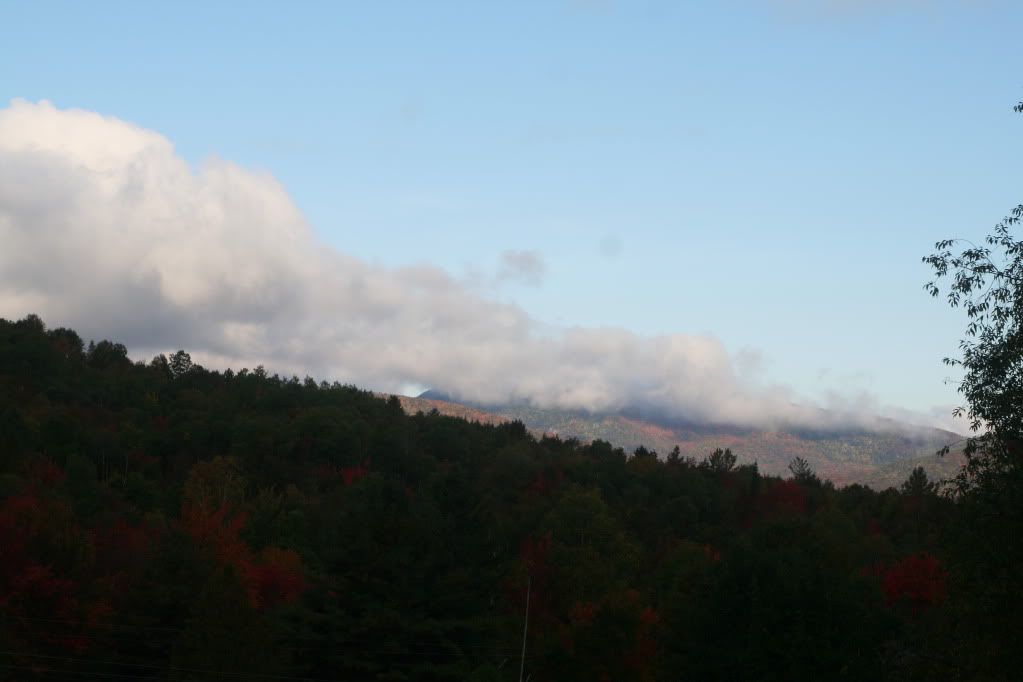
But then, every once in a while the Red Gods smile on me and provide me a morning as pictured here, clear and cool with a hint of chill in the air... Colors beginning their mystical appearance on the sidehills.. Dogwork that once again restores my faith that things actually are right with the universe, and that the hours spent really are worth it.

We had, all in all, a beautiful opening week, made all the better by the visit of another thoughtful and inspired kindred spirit. The kind of folk that restores faith in humanity to a somewhat jaded psyche.

A more than successful start to another season...

Saturday, September 12, 2009

Fall leaves


I've yet to meet the person that does not wax nostalgic on the beautiful scenery of Fall. And what more beautiful place to immerse oneself the color than New York's beautiful Adirondacks?
According to this website, the Adirondacks of New York are rated #1, as well they should be!

If you can get some time to get away, plan on a trip to New York's North Country.. As a bonus, bird season opens on September 20th...

Just stay out of my coverts! LOL

Pictured... Looking Northwest to "Big Blue," Blue Mountain from my garage... Past peak.

Tuesday, April 21, 2009

Bigfoot in the North Country??


I'm of the opinion that there is much more in this world than we know, so I usually keep a fairly open mind... Or, maybe it's just the kid in me that still likes to be scared out of his wits on a dark, gloomy night...

Read about it here....

Tuesday, April 7, 2009

Old time Adirondackers


I don't know how many folks subscribe to "The Conservationist," the publication of the New York State Department of Environmental Conservation, but the price of admission is well worth the expense, as there are always articles that are not only educational, but entertaining as well.
The latest issue features a profile of an Adirondack native that has made a lifetime of difference for all those who love these ancient mountains. And that man is Clarence Petty.
Click the picture to enlarge, and click the link to read how this 103 year old giant of a man made a huge difference for a worthy cause in his lifetime!

Thanks to the NYS DEC and The Conservationist..

Sunday, November 30, 2008

"Been dead ever since"

Those who know me are aware that Noah John Rondeau, The Hermit Of Cold River, has been a long time hero of mine. Some may see Bill Gates, one of the world's richest men, as a hero, but I'll stick with those that are rich in more spiritual ways..
It's Sunday, and the weather outside is unfit for man or beast, so I thought it might be a good day for a good read..
This comparison of two unlikely compatriots, might fill the bill...

From the writings of The Airondack Museum...

Noah John Rondeau..

Enjoy a relaxing Sunday..

Monday, September 29, 2008

The Adirondack Museum


This museum in Blue Mountain Lake, NY, is worthy of a trip from anywhere. I've been there a number of times, and always find something of interest when I return. The Adirondacks is chock full of historical signifigance, and the museum takes it all to a higher level.
This past weekend was a tribute to hunting and fishing in the Adirondacks. These pastimes were a huge influence on opening up the wilderness to the sports from the city, and provided a livlihood for many of it's residents..

The following is an article about the museum and the weekend's festivities. And by the way, Pat sisti is also Indian Lake's "Father Christmas", and he does a fantastic job as such..

_______________________________________________________


Adirondack Museum Celebrates Hunting and Fishing

The Adirondack Museum is planning to celebrate National Hunting and Fishing Day tomorrow Saturday, September 27, 2008. The museum is planning "A Sportsman's Paradise," a day-long extravaganza of programs, demonstrations, and music - just for outdoor enthusiasts. Activities are scheduled from 10:00 a.m. until 5:00 p.m. All are included in the price of general admission.

Demonstrations will include "Casting a Line" with licensed guide and fly-fisherman Patrick Sisti, "Fly Tying" with Geoff Schaake co-owner of the fly-fishing and fly-tying web site www.theanglersnet.com, and "Fish Decoys and Lures" from mother-of-pearl as made by Peter Heid.

Members of the American Mountain Men will return to the museum campus, creating a living history camp that will feature the traditional equipment and gear that would have been typical of a nineteenth century hunting excursion in the Great North Woods. The group will discuss historic hunting and trapping techniques and demonstrate target shooting with Flintlocks as well as knife and tomahawk throwing.

An Author's Corner and Book Signing will be held in the museum's Marion River Carry Pavilion from 10:00 a.m. until 2:00 p.m. Participants will include: Dan Ladd, whose book Deer Hunting in the Adirondacks serves not only as a guide to public lands open to hunting, but also looks at the history and lore surrounding hunting in the Adirondacks; Robert Elinskas, author of A Deer Hunter's History Book - a collection of tales from the Blue Ridge Wilderness Area; and Donald Wharton whose collection of Adirondack outdoor stories about trout fishing, bush pilots, deer hunting and more is entitled Adirondack Forest and Stream: An Outdoorsmen's Reader.

The New York State Department of Environmental Conservation booth will provide information and answer questions about hunting and fishing in the Adirondacks throughout the day.

Adirondack musician and storyteller Christopher Shaw will delight audiences of all ages with music celebrating the great Adirondack outdoors at 1:00 p.m. and 3:00 p.m.

At 2:00 p.m. an illustrated presentation, "Images From Trail Cameras," will be held in the Mark W. Potter Education Center.

The day will conclude with "Adirondack Pond Fishing 101" with Patrick Sisti. Sisti specializes in fly-fishing, fishing trips on the Indian River and Adirondack ponds in central Hamilton County as well as hiking camping, canoeing, and nature walks. His presentation will take participants through the steps taken to locate an Adirondack pond, get there, and fish. Handouts will be provided.

"A Sportsman's Paradise" visitors should not miss the exhibits "Woods and Waters: Outdoor Recreation in The Adirondacks," the "Buck Lake Club: An Adirondack Hunting Camp," and "The Great Outdoors" - an interactive space that is perfect for family adventures.

The Adirondack Museum tells the story of the Adirondacks through exhibits, special events, classes for schools, and hands-on activities for visitors of all ages. Open for the season through October 19, 2008. For information call (518) 352-7311, or visit www.adirondackmuseum.org.

__________________________________________________________

For those that would like to see more of what the Adirondack Museum has to offer, click here....

Monday, September 15, 2008

Moose on the loose


This picture was taken Wednesday, May 28, 1999 at 8:45 a.m. in the Birch Hills development off Rt. 30 in Sabael, Town of Indian Lake. The moose appeared wet, as though it had just swam across Indian Lake. It was first spotted walking up from the lake as it crossed Route 30. It was last seen walking toward "downtown" Indian Lake. The awesome beast inspired a healthy respect. "My hands were shaking when I took the picture" Dr. Daniel Way reported.
(reprinted courtesy of the Hamilton County News and Dr. Daniel Way).

__________________________________________________________________


Moose are making a big comeback in the New York's North Country. I saw one running in a drainage ditch a few years back out on Fagan's Flats, on Route 28 between Indian Lake and Wevertown. A number of vehicles stopped to watch him, as he crossed the road and ran up into the forest. My estimation would be that this bull stood between six and seven feet at the shoulder.. truly a magnificent animal.
The following report from The New York Times, also provides a good account of the comeback..

I sincerely doubt that I'll live long enouigh to see a season on Moose, and at this point in my life, I'm not sure that I'd take one if I could. But, it's encouraging to see their numbers increasing, and it certainly is a thrill to witness their return to the wilds of the Adirondacks.

Wednesday, August 20, 2008

Some history, and the macbre, from the ADKs

Little Canada, as in the article that follows, is a short hike from my camp in the Adirondacks. We catch the State trail to John Pond. My wife and I, and the dogs, have gone back there many times over the years, and we always stop and pay our respects to Peter Savarie and Eliza King, the children buried amidst the State Forest preserve..

I though that some readers may find it as interesting as I do...


REPORT OF THE TOWN AND COUNTY
HISTORIAN ON THE AREA KNOWN AS
“LITTLE CANADA” IN THE TOWN
OF INDIAN LAKE

January 25, 1982

When any change is contemplated to a given piece of land, such as the erection of a government-funded building, I am asked to testify in writing as to whether the land has historical value.

There is an area that has such definite interest in the history of the Town of Indian Lake that attention must be called to any suggestion to change it. This area is, since hearings held in 1914, the property of the State of New York since the inhabitants were unable to produce sufficient evidence, such as deeds, of ownership. Its location is the mid-section of Lot 15 of the Totten and Crossfield Purchase and was known as “Little Canada.” One of the first settlements in the Indian Lake area, it was inhabited principally by French Canadians, who came here originally for lumbering, then turned to farming. The records of the hearings as to ownership of this and other lands in Township 15 are on file in the office of the County Clerks of Hamilton and Essex Counties.

Township 15 was originally owned by the Finch Pruyn Company. It was sold to the Indian River Company which, prior to 1914, sold it to the State. People on the land were to be allowed to remain provided they proved private ownership. This caused the New York State hearings in 1914, held primarily at Indian Lake Village.

An interesting sidelight was provided in the hearing on Lots 22, 2?, 46, and 47, the suit against Sarah Farrell on June 13, 1914. Loucks, who introduced each case, stated:

“I would like to have the record show in some of these cases that Finch & Company and John McGinn and the Crandalls kept what they called the Township 15 book, in which they kept an account of land that had sold and amounts paid. That was kept in the offices at Glens Falls, and at the time of the death of George C. Finch, certain papers were removed from the vault, and so far as we can ascertain, that Township 15 book has never been seen since. We have made diligent search at the offices of Finch Pruyn, and the International Paper Company, and have interviewed Mr. Root, who kept the book, and other people who had a right to know, and made demand on Griffin & Ostrander to produce it. We have not been able anywhere to find it or get any trace of it. The book ought to contain a record of all these transactions. It is in the possession of somebody down there probably very close to the Indian River Company, and we have tried to impress on them that it is their business to produce it. I think that book would throw much light upon all these transactions. We also investigated Mr. McGinn’s, looked through his books and papers, and we were unable to find anything there either. Jerry Finch claimed they took it away. He makes the assertion with some vigor.”

Although many of the residents of Lot 15 were adjudged rightful owners of the property they occupied, the people of Little Canada, were, without exception, ousted from their lands. Principal land holders so affected were Mrs. Mary Savarie, widow of Gideon Savarie, in Lots 113, 114, 127 and 128; Abraham King in Lots 112 and 113; Augustin DuMars in Lot 112; and Mrs. William Starbuck, occupant of the original Eldridge property and of the house known as headquarters for the Finch, Pruyn lumbering operation in Lots 104 and 105. Eldridge once kept a store here.

A road following the outlet of John’s Pond in Lot 102 and joined by a stream emanating from a location near Chimney Mountain, comprised the center of the community. The road has been kept open and bears State markers for the use of State residents and visitors for recreational purposes.

There were burials in this area, principally of children, who died in the dread diphtheria epidemic of 1897. We know the approximate burial places of three children of Joseph Abare and of two Porter children (across the stream from the former mill pond). But the Town has definitely located and maintained the graves of two children, placing crosses on their graves, with a fence surrounding these. This cemetery is located on State Surveyor D.C. Woods’ map of June and July, 1903 as in Lot 114.

Their names and histories are well documented and tin-type pictures of the two deceased are available from a relative, Henry King. They are half-brother and sister:

Peter Savarie, born May 1, 1886, son of Gideon Savarie and Olivia Moquin (or McQuin).
Eliza Amelia King, born April 13, 1883 of Abraham King and Olivia McQuin.
Each was baptized in St. Joseph’s Catholic Church in Minerva and the records are documented there:

“Peter Savary, baptized May 30, 1886, born May 1, 1886. Parents — Gideon Savary and Olivia McQuin. Sponsors: Peter Savary and Anna Farrell”

“Roy (King), Eliza Amelia, baptized May 6, 1883, born April 13, 1883. Parents — Abraham Roy and Olivine McQuin. Sponsors — Celestine Savary and Ida Roy.”

The circumstances of their death are given in the book, “Adirondack Folks” by Ted Aber, beginning on page 92:

“The small log house was in Little Canada, a satellite community of Indian Lake, located five miles from the Milo Washburn mill pond just over the then Hamilton County line. It had been settled by Frenchmen from Canada. The families of Dumars, DeMarsh, Starbuck, Abare, Gasper and Bram King, and the Savaries were among the settlers. At one time, it even sported a store run by “Old” Eldridge. Some years ago, Henry King found a board of paper and tin that denoted the store’s location. Words on the sign showed that Eldridge had let someone have a barrel of flour.

“The dreaded and little understood black diphtheria visited Indian Lake in the 1890’s and Little Canada was not spared. A small log house in Little Canada bore a distinctly somber note one night. Its inhabitants wore tired, drawn faces. The limited conversation was in whispers. In separate rooms lay Peter Savarie and Lizzie King, aged about 15. They were gravely ill.

“As moments passed, young Lizzie King closed her eyes forever. Young Peter Savarie must not be told. Shortly, without warning, he began to sing hymns. Pausing a moment, he would say, ‘Yes, Lizzie, I’m coming.’ Within the hour, the young man had also succumbed to the illness. They were laid to rest in a little cemetery of the small community. Their father, Bram King, had a brother and a sister, who also died of diphtheria and were buried nearby. Bram himself was stricken, but went to Canada and was cured; he never returned...

“Little Canada became extinct around 1915, the State acquiring most of the land. But Henry King often walked to the scenes of his boyhood, now overgrown with brush and trees. On one occasion, Henry and Earl King were in Little Canada night-hunting. Nearing the silent graves of Lizzie King and Peter Savarie, the two young people who had died there of diphtheria, the men heard a rumbling, moaning sound. As they continued onward, a vibration could be felt at their feet. They began a quick retreat. Then the noise and vibration withdrew up the road. Henry late erected a snow fence around the grave and has kept it intact ever since.

“Henry has clear tintype photographs of Lizzie and Pete. The pictures hung on the wall when the house burned down, the photographs remaining intact and undamaged.”

The town and county historian, in conjunction with legal assistance is now preparing to acquire and see to the upkeep of all such cemeteries in the county and is currently prepared to place a marker, with the names of the interred, at the entrance to this particular grave site.

This is being done under the provisions of Section 291 of New York State Laws Relating to Cemeteries:

“291. Burial grounds. 1. The title of every lot or piece of land which shall have been used by the inhabitants of any town in this State as a cemetery or burial ground for the space of fourteen years shall be deemed to be vested in such town, and shall be subject in the same manner as other corporate property of towns, to the government and direction of the town board. In any town the town board may adopt regulations for the proper care of any such cemetery and burial ground and regulating the burial of the dead therein. It shall be the duty of the town board to remove the grass and weeds from any such a cemetery or burial ground at a cost not to exceed five hundred dollars...”

The implication is clear and contained in many existing deeds that access to such cemeteries must be assured. The present road is passable for four-wheel-drive vehicles but improvement has already been agreed upon by the Town of Indian Lake.

Someone has made the suggestion that the road might be closed to vehicles at the county line between Hamilton and Essex County. A part of Little Canada crosses a corner of the Town of Johnsburgh, or perhaps put more clearly, the corner of the Town of Johnsburgh intrudes into Little Canada. The suggestion of a demarcation here is neither feasible nor historically appropriate:

Little Canada, as an historical area, would be truncated.
According to D.C. Wood’s map, the cemetery is perhaps just across the suggested demarcation line.
Although the road to John’s Pond crosses the boundary, John’s Pond itself is in the Town of Indian Lake, according to the State Conservation Department map.
John’s Pond remains a recreational and fishing area for numbers of the people of Indian Lake, just as it once did to their ancestors who inhabited the area.
There are other historical reasons for maintaining this relatively short vehicular road to John’s Pond.

The original road to Indian Lake from North Creek cane from Thirteenth Lake in Warren County and joined the present Little Canada road. The original Indian settler of Indian Lake, Sabael Benedict, was last seen when he set out over this route from Thirteenth Lake one night in 1855. He was reputedly 105 years of age. Someone wrote a poem accusing “Sav’ree” of his murder. Whether true or not (the subject is receiving further study), his death presumably occurred near the Savarie house farther up the road toward John’s Pond (see D.C. Wood’s map).

Still another historical fact, although requiring more research, is the naming of John’s Pond, and John Mack Bay on Indian Lake. A nationwide Place-Name Survey is now being conducted under the ægis of the Federal Defense Department. The Hamilton County and Indian Lake Town historian has been named to find the origin of all names in Hamilton County. It was known that about the time of the Civil War, a man remembered as John MacKenzie came from Canada, and lived in the area, giving his name to these locations. I would regard the first as fact, but would feel that the name, MacKenzie, is perhaps not correct. More probably, that name was an Anglicized version of a French name.

It is our contention that New York State’s rich history should remain available to the public. With further study, the county and town historian, will petition the State to allow markers to be placed at the more important house sites in the Little Canada area. We believe that this relatively small area, known for its exceptional beauty, should be made accessible to all who may care to visit.

Respectfully submitted,

Ted Aber, Historian

Hamilton County and
Town of Indian Lake

Friday, July 25, 2008

The Musings of a Part-Time Adirondacker


My wife and I, and of course the dogs, got away for a week and a half to our Adirondack camp. It's great to get away with the dogs, and we all never fail to have a great time. There is always much work to be done, but, the dogs get time to run the Forest Preserve, and there is also alot of down time.
One of my favorite ways to pass the time is to sit on the porch, watch a couple of cars a day pass down the unimproved road out front, and sit and watch the hummingbirds at the feeder hanging from an exposed roof rafter mere feet from where I sit.
It struck me as I watched just how much the pretty little birds are like humans. There is more than enough nectar for everyone. There are four feeding stations on each feeder, and yet the hummers squabble like school children. Two birds at the same feeder at the same time is a rarity, without one trying to chase another off.. They spend much more energy chasing and fussing than feeding.
Since there is so little stimulation at the camp; No TV... just NPR and a good book... one's mind starts to ponder nature's ways.
I thought to myself how much better a world it would be if humans and hummingbiords could just take what they need and no more... and just learn to get along...

It's tough to leave camp and touch down at reality again..... but.. someday...

Wednesday, May 28, 2008

A hike up Snowy


Snowy Mountain is the dominant landmark in my neck of the woods in the Adks. It's scarred peak can be picked out for miles in any direction, and while I've hiked many of the mountains in the area, Snowy has eluded me. My son has done it at least four times, and I feel that if I don't attempt it soon, it will be beyond me..
So, if you'd like to take a hike up Snowy, check out Mountain Visions for a guided hike, and some magnificent views taken from the old fire tower,
In the old days, these fire towers were manned on a daily basis, and I know folks who used to do the hike up and down some of these mountains on a daily basis to man a tower. That's a job for young men, but, the old Adirondackers were tough, and many did it, and other jobs in the woods when they had become somewhat "long in the tooth." I respect these local folks greatly for their toughness, grit, and "do it myself" attitude..

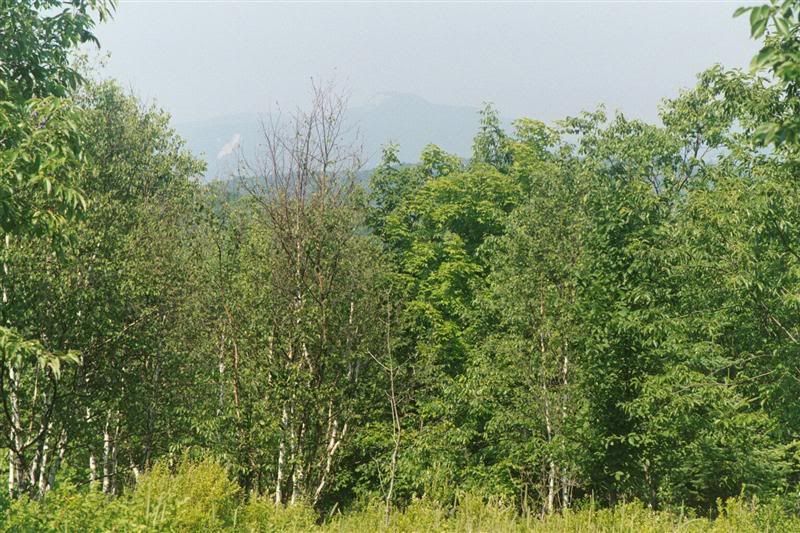
The picture at the heading was taken from the hill behind my camp on a hazy summer day. That craggy mountain is Snowy, the other side of Indian Lake.

So, take the hike up Snowy and enjoy some beautiful Adirondack scenery..

Sunday, May 25, 2008

"The Adirondacks"


"The Adirondacks" has been running on PBS. It's a great program, and gives a lot of information and outlook on the greatest wilderness area east of the Mississippi. The commentary is a touch one-sided, as not many "locals" have a chance to air their views on subjects nead and dear to their hearts... The Adirondack Park Agency in particular.
But, the show is very informative, and certainly well worth your time.

Catch it if you can..

Wednesday, May 7, 2008

The French Connection...

Small roads, big-time smuggling
By Don Lehman
dlehman@poststar.com
Published: Sunday, May 04, 2008


The stretch of Route 28 between Johnsburg and Indian Lake is among the most desolate pieces of highway in the region.

It's a strange stretch of road to be a favorite among big-time drug traffickers.

But in recent years, as federal authorities have focused on the Northway as a conduit for illegal aliens who recently entered the country, marijuana dealers who move tons of pot into the U.S. through the Canadian border have turned to the smaller state and county highways that cross the Adirondacks.

Among them is Route 28, which runs east-west across much of the Adirondack Park, intersecting with Route 9 in Warrensburg and a number of other north-south routes to the north.

"We've known for a while that Route 28 has been a pipeline from the north, coming down from the (Indian) reservation," said Warren County Undersheriff Robert Swan.

Route 28 was the highway four Massachusetts men took to arrive in Warrensburg early the morning of Feb. 25. Erratic driving drew the attention of Warren County Sheriff's Officer Jeremy Coon, who stopped their car on Route 9 and found it to contain a duffel bag with just under 10 pounds of high quality marijuana inside.

The same night, the Sheriff's Office seized 126 pounds of marijuana three Canadian women were allegedly transporting south on the Northway. That was the biggest seizure in Warren County history, and the women's explanations to police of how "dummy cars" were used to test police resources opened some eyes.

In both cases, the people transporting the drugs brought them into the U.S. through the St. Regis Mohawk Indian Reservation, which sits in the Franklin County town of Akwesasne.

The recent arrests have prompted some new initiatives by local police and prosecutors as they work to cut the flow of drugs, particularly large quantities of marijuana destined for other areas, through the region.

Police and prosecutors hope the use of technology, and the combining of resources, will allow authorities in Warren County pluck more pot as it is transported south.

"We know there is a lot of (drug) traffic going through our area from the north," said Warren County District Attorney Kate Hogan. "There are some things we're looking into to interrupt that traffic."

The Glens Falls region has long found itself at a literal and figurative crossroads in the marijuana trafficking networks of the Northeast, thanks in part to the 8-plus-mile hole in the border where the Akewsasne reservation sits.

The reservation straddles the U.S.-Canada boundary, making it an attractive spot for those who want to smuggle drugs or illegal immigrants into the U.S. Tribe members have the right to move unchecked across the border on the reservation, and only a small force of tribal police patrols on the U.S. side.

Those who want to head to the New York City, Boston or Hartford, Conn., areas generally have to go south, and the shortest routes take them through Essex, Warren and sometimes Saratoga counties.

"The majority of it is going to the New York City area, but we're seeing a lot going to Boston," said Timothy Harvey, a sergeant with the Royal Canadian Mounted Police.

Franklin County District Attorney Derek Champagne, in whose county the St. Regis Mohawk Reservation sits, said a billion dollars a year worth of marijuana is estimated to come across the international border at the reservation.

"You've got seven unmanned roads that come across (the border) through the reservation," Champagne said.

Champagne's office is part of a federal drug task force that in part targets smuggling through the St. Regis Mohawk reservation, and said.

And while some debate whether marijuana should be illegal, he said police area aware of at least three recent homicides (two in Canada, one in the U.S.) that were tied to marijuana smuggling efforts originating at Akwesasne.

In a series of raids last month, police on both sides of the border seized more than 700 pounds of marijuana and $2 million from one ring, and Champagne said police are aware of groups that move as much as 1,200 pounds of pot a year through the reservation.

St. Regis Mohawk tribal leaders have downplayed the drug smuggling issue, with a tribal police officer telling The Associated Press last year that other parts of the boundary are just as troublesome as those on the Mohawk reservation.

Police on both sides of the border, though, disagree.

"It's been an ongoing problem of drugs going into the U.S. from Canada and (illegal) cigarettes coming into Canada from the U.S." through the reservation, Harvey said.

New York City is the main destination, but Champagne and Harvey said there are connections to other cities across the country as well.

Champagne said police have tracked marijuana shipments that came across the border in Franklin County to not only big cities in the Northeast but as far away as Florida and Texas.

The shortest, and quickest, route to New York City and points south and east from the Canadian border generally brings motorists to the Northway, but the 1999 creation of a U.S. Border Patrol checkpoint on the highway in North Hudson (which has since been closed) forced many to try to find ways to bypass that stretch of the highway.

That put them onto roads like Route 30, Route 9 and Route 28, and often takes them through the heart of Warren County as they try to connect with other interstate highways like 90 and 95.

"Warren County is in the conduit," Champagne said.

The recent arrests in Warren County prompted Champagne to sit down with Warren County District Attorney Kate Hogan to try to figure out ways for authorities in Warren County to work with their counterparts to the north to target the drug traffic filtering south.

One way is to have police allow those they catch with large quantities of marijuana to make controlled deliveries of the drug to the intended recipient, which allows authorities to nab one more person in the conspiracy and increase the chances of working their way into the distribution ring.

State Police Capt. Robert LaFountain, who supervises troopers in Troop B which includes Essex, Franklin and Clinton counties, said traffic enforcement is one of the ways to counter large-scale marijuana networks.

"You need a combination of good intelligence and good police work," he said.

Swan said Warren County sheriff's officers will be receiving more training in tactics like highway drug interdiction, an issue that was among those touted by Sheriff Bud York when he ran for office last year.

Hogan said technology, like police cars equipped with license plate readers that can be tailored to watch for a "hot list" of suspicious vehicles, can be used as well.

"The more sophisticated these groups become, the more sophisticated we have to be," she said.


Now, one may ask... What do these last two entries have to do with the price of bananas, and why are they posted on a Gordon Setter site??
Well, in the hermit post, the property my camp sits on in the Adirondacks backs up very near the northwest corner of Warren County, so the hermit wasn't too far off..

And, Route 28 is one of the two main drags in or out of Indian Lake, and I use the road all the time....

Tuesday, May 6, 2008

A modern Adirondack hermit


Man tells police he has lived in woods for past 20 years

Buried in the thick woods of northern Warren County, 2 miles from the nearest road, was a testament to human adaptability.

A tarp-covered lean-to loaded with clothing, sleeping bags and provisions — items believed to have been stolen from seasonal homes around the Brant Lake region — was his residence, at least for the last several months.

The man police believe endured the elements of the Adirondacks in a pine-branch shelter was Alan G. Como, 56, whose last known address was in Massachusetts, police said. He told police he’d lived in the woods for the past 20 years.


This guy had been breaking in and burglarizing camps for gear - for 20 years!! Seems he started near Chazy Lake and began moving south after he was detected.

Big and muscular with little fat on his body, police said he is in remarkably good shape for someone his age who has apparently lived in the woods for at least several years.

“He’s a pro. He knows what he’s doing,” Cleveland said.

Only items needed for survival — clothes, sleeping bags, food and batteries — were taken during the burglaries, with the thief leaving behind valuables like jewelry and electronics, the sheriff said.

Here’s the best account of his capture:

For over a year, Warren County Sheriffs Deputies and State Police have been looking for a man living in camps in the middle of the woods, stealing items here and there from camps in northern Warren County.

“A lot of people seen him and whatnot, but they just weren’t able to catch up to him,” says Paul Smith, with the Horicon Highway Department.

Until Wednesday, the arrest of 59-year-old Alan Como came on the heels of a Tuesday morning tip from two Horicon snowplow operators who saw something that just did not look right.

“2:30 in the morning, somebody is out on a bicycle and there is two-inches of snow on the road…something is going on,” says Mark Younes, with the Horicon Highway Department.

There was a bike trail in the snow that the plows followed along their route.

“I finally tracked him out on to Pallisades Road, which eventually leaded to Beaver Pond Road,” Younes says. “Then that was the end of my route, and one of the other plow guys picked the track up from there.”

The plow operator followed the tracks in the snow until they went over the snow bank and left the road.

“They sent up some investigators…Mark and I went up to show them where he went over the bank, and they took it from there,” says Smith.

After two days of scouring the woods, on Wednesday, deputies found Como’s latest campsite.

“(It was) about two-miles in, way back in the deep woods…(we) spooked this guy out of his place,” says Warren County Sheriff Larry Cleveland.

Then, a nearly two-mile foot chase ensued, until Como ran into uniformed officers waiting for him.


___________________________________________________________________________


These stories never fail to capture my imagination... I guess I'm a "hermit wannabee"!
I've always been a bit of a loner, often don't work and play well with others, and just generally cherish my alone time.. Don't know if I could withdraw from society for twenty years, but I must admit I find the idea appealing.
I'm also not enamored with rules and regulations, unless I come to the realization on my own that it's what's best for me.
I remember seeing doormats that had the inscription "GO AWAY".. I always wanted one, but gave in to my wife's wishes.. She could be the only person that keeps me from a primitive life in the woods..

Hmmmmmm.

Wednesday, April 30, 2008

More Patch Beagle history

I found some more history on the Patch Beagles, later in Willet Randall's life when he was working out of kennels in North Creek, NY.
This is some interesting stuff, and gives some insight into this working man's working dogs...

Rather than post it all, I'll post the link to the site...

http://www.baldeaglebeagles.com/patchhistory.html

Sunday, April 27, 2008

A great little read..


No, it doesn't pertain to Setters, but another working dog that makes his living the hard way... by keeping his nose to the ground! The beagle...

This is a great little book, by Willet Randall, for anyone who appreciates the working dog. Mr. Randall, now deceased, started the Patch Beagle Kennels, out past Fagan's Flats between North River and Indian Lake, in the Adirondacks of New York.
He had a kennel full of beagles, and derived his most enjoyment listening at night to the baying of the pack running a hare. Oddly enough, his favorite dog, and we all know about "that one dog", was a dog that would take a nip out of him for the slightest provocation.
Willet Randall is one of those crusty old folks that appear larger than life. He spent much of his time living in an old house haunted by a spirit, out in Beaver Meadows. He was a long way from civilization, and he'd fondly recall when the boys from Indian Lake would extend their tour a little to come plow him out..
There's also a great little tale about an Indian he met back in the wilderness while the hounds were on a trail, whom he befriended and had out to the haunted house for a wilderness dinner.
For those who would care to read the book, I won't give too much away. Suffice it to say that it's a worthwhile read for any dogman, wilderness lover, those who can open their minds to the possibility of the occult, or anyone in general looking for a book they won't be able to put down until it's finished..

I heartily recommend it!

Friday, April 25, 2008

The Story of a Conservationist


Paul Schaefer, pictured left in 1963, was a hunter, hiker, and conservationist of uncommon virtue since he was 11 years old in 1919, wearing a tiny pin stamped with "New York Conservationist" after attending a meeting held by State Conservation officials.
Until his death in 1997 at his beloved home in Niskayuna, NY, at the age of 87, Schaefer had preserved that memento in a small leather change purse.
This great monument of a man went to work after completing just one year of high school, to help support his family, yet he became the most vocal and articulate supporter for preservation of the Adirondacks. Schaefer's greatest fight for preservation came during the late 1940's, when Utility companies proposed 35 major hydroelectric dams and reservoirs that would have involved clearcutting and flooding several hundred thousand acres in the Adirondack Park... including the largest deer wintering grounds on the Moose River Plains.
In his forward to Schaefer's book, Defending the Wilderness, Charles Callison writes "As the decades passed, others may have been up front in the halls of legislation or courts of law, but it was Paul Schaefer who was their coach, their cheerleader, their pamphleteer and their supplier of facts, facts gleaned not only from books, but firsthand on innumerable hikes and camping trips into remote reaches of the great region, as often carrying a camera as a fishing rod or deer rifle."
Schaefer's legacy is now preserved at the Association for the Protection of the Adirondacks, temporarily based ay his home in Niskayuna, pictured above right..
Paul Schaefer's efforts are still felt today, from his rustic cabin in Baker's Mills, to the entire area inside the Blue Line...
Every Adirondacker owes Paul Schaefer a debt of gratitude...

Thursday, April 10, 2008

Big Cats in the Adirondacks???


I hope not! But, a few of my neighbors in the central Adirondacks claim to have seen what they call a "puma". They have also come across deer kills that look like nothing they have seen before. Even the DEC people who have responded are baffled, since the DEC holds the position that there are no big cats in the North Country of New York.
Here's an interesting dissertation from the February 2008 edition of "The Conservationist", the official publication of the Department of Environmental Conservation...


Big Cat Tales
By Scott Van Arsdale
The caller said he could see the cougar--it was lying down at the edge of his lawn by the woods. I immediately began the half-hour drive to the site, but by the time I arrived, the animal was gone.

Once the most widespread of land mammals in the New World, cougars roamed the continent from Patagonia in South America to the 48 continental United States to southern Canada. However, all changed with land settlement. Settlers considered predators such as cougars competitors, and shot them whenever possible. Some areas had lucrative bounties for dead cougars. By the mid-1800s, these cats were very rare in New York. The state's last known wild that cougar was killed in 1894. A few years later, the cougar was gone from the entire eastern United States, except for a small remnant population in Florida.

The phone call about the "backyard cougar" was one of several cougar sighting reports DEC received in August 1995 from a small area near Oneonta. I was hoping to find irrefutable evidence of exactly what animal was leading to these reports. To me, the most intriguing point was the clustered nature of the sightings. It led me to question DEC's standard response of "mistaken identity." Perhaps we were being too hasty in dismissing such reports. I decided to personally visit sites where there was a good chance of finding physical evidence proving whether the animal seen was, in fact, a cougar.

I also decided to start a regional log of cougar sighting reports. A year later, my log contained 44 reports of cougar sightings in east-central New York. Although wildlife staff visited many of the locations where cougars had been reported, we couldn't find any physical evidence (hair, tracks or scat) proving the presence of a single wild cougar. So how can an animal officially considered "extirpated" in New York State generate so many sighting reports? And if people aren't seeing cougars, what are they seeing?

While looking for physical proof of cougars in the region, we have found that people often mistake other animals for cougars. Dogs, coyotes, bobcats, and a surprising number of house cats have all been the subject of reported cougar sightings. This isn't unusual. When seen fleetingly or from a distance, these animals may appear to look like a cougar. In December 2006 we received a call from a man in Greene County. He and his family saw what he was sure was a cougar in their yard several times, and he had managed to take a few photographs of the animal at a distance. I asked the man to e-mail the photographs to me. The cat depicted in the photo was similar in color to a cougar, but to a trained eye was almost certainly a house cat. To be sure of my assessment, I visited the site of the incident and placed a life-sized cardboard cutout of a cougar on the spot where the cat was photographed. Then I took several pictures from where the original photographer was standing. The new photographs clearly showed the cat was much too small to be a cougar and was indeed a house cat. We also measured objects that were near the cat in the photographs, which further proved that the animal was not a cougar.

Wildlife agencies in other states corroborate our experience: even in areas with known cougar populations, it is common for people to mistake other animals for cougars. Upon closer inspection of evidence such as tracks, scat, photos or videos, we can sometimes tell exactly what kind of animal had been in an area when the sighting was reported. Unfortunately, most reported cougar sightings lack good physical evidence, making it impossible to positively identify the animal. This can cause hard feelings, as many people are convinced they have seen a cougar and feel frustrated that wildlife officials don't believe them. A few individuals question wildlife officials' credibility, suggesting that they are covering up a wildlife reintroduction or "stocking" program, which may discourage others from reporting sightings. With so many clear cases of mistaken identity, it would be irresponsible for biologists to consider a sighting without physical evidence as proof of existence. Although a sighting is a key component of determining presence or absence, physical evidence verifying the identification is also critical.

While we have not found definitive evidence of cougars in east-central New York, a DEC wildlife biologist investigated a deer carcass in the Adirondacks in 1993, and concluded it was probably killed by a cougar. In 1997, DNA testing confirmed that scat found in Massachusetts was from a cougar. Similarly, DNA testing confirmed the presence of cougar hair in four instances in the Province of Quebec and two in New Brunswick.

Assuming these incidents of free-roaming cougars are true, does this mean there is a wild breeding population of these big cats in northeastern North America? Not necessarily. It's more likely that these animals were accidental escapees or illegally released individuals that managed to survive for a time in the wild. Under strict guidelines spelled out in permits issued by DEC, people can possess live cougars for scientific, educational or exhibition purposes. However, it is illegal for cougars to be kept as pets. Despite this deterrent, a number of individuals illegally bring these cats into New York from other states. While cute and manageable as kittens, adults weigh more than 120 pounds and are expensive to keep, consuming large amounts of fresh meat. These captive cats can be unpredictable, posing a danger to their owners. It's not hard to imagine someone who illegally possesses such a dangerous animal to try to solve their problem by releasing the cat. Nor is it difficult to imagine such a strong animal escaping confinement.

In 1993, a hunter shot a juvenile cougar in Saratoga County, mistaking the animal for a bobcat. The animal's poor condition and other factors led DEC Wildlife Pathologist Ward Stone to conclude the young cougar was a recently escaped or released captive. DNA testing conducted on tissues from the animal supported the findings. The tests showed the cougar was closely related to cougars from South America, a source of some of the captive cougars in the U.S.

There have been other cases of free-roaming cougars in New York with captive origins. In fact, information I received a few years after beginning my log indicated that just before the sightings occurred in Oneonta, a cougar had indeed escaped from captivity in the area. Escapes don't eliminate the possibility of a wild cougar population, but it is likely that any real cougars sighted at large in New York are previously captive animals.

Some people suggest that cougars were never extirpated from the northeast, but that a small remnant population survived in a remote area such as the Adirondacks and has spread to other areas. On the surface that may seem plausible, but scientific study doesn't support it. In 1981, SUNY College of Environmental Science and Forestry's Dr. Rainer Brocke released the findings of a study (requested by DEC) to determine if the Adirondacks were suitable for the reintroduction of cougars. In that study, Dr. Brocke examined the possibility of cougar populations existing outside the known locations in the western U.S. and in Florida. Dr. Brocke noted that although genuine sightings of cougars are rare, cougar sign was quite easy to find in areas known to be occupied by cougars. Since cougar sign is not generally observed in New York, Dr. Brocke stated that this was a good indication a population does not exist.

Furthermore, after comparing the Adirondacks with known cougar habitat, he concluded that a cougar reintroduction attempt would likely fail in the Adirondacks because the state's relatively high road density and human population would lead to human-induced mortality rates greater than such a cougar population could support.

Cougars have expansive home ranges. They travel great distances, and in so doing, cross and re-cross roads. Road-kills are not uncommon in cougar range, even in areas with far fewer roads and less traffic than the most remote areas of the northeast. If a cougar population existed in New York, the high road density and heavy traffic (relative to the western U.S.) would almost certainly result in road-kills. Yet road-killed cougars are unheard of in New York.

Additionally, when cougars travel, they leave tracks- lots of them. The tracks are relatively easy to spot, and in cougar country, biologists use track surveys to estimate cougar population levels. A lack of tracks means a lack of cougars. To date, no one has been able to find cougar tracks in New York.

Another clue to cougar presence is livestock predation. Out west, offending cougars are killed by ranchers, farmers or government officials. And while there are rumors of cougar attacks on livestock in New York, none have been substantiated and no carcasses of problem cougars have turned up.

While most wildlife professionals agree that it is highly unlikely a sustaining cougar population exists in New York or neighboring states, western cougar populations are spreading eastward. A few individual cats have shown up in states along the Mississippi River. Could they eventually populate New York where there are large areas of forest and plenty of deer? Maybe. But to be successful in New York, cougars would have to overcome the same factor that led to their initial demise-human-induced mortality, including the "new" threat of being hit by cars. For now, we'll continue to examine the physical evidence associated with reported cougar sightings with an open mind, one case at a time.

For more information on the eastern cougar, search "cougar" on DEC's website www.dec.ny.gov, or visit: www.fws.gov/northeast/ECougar or www.easterncougarnet.org.

Scott Van Arsdale specializes in bald eagle work in DEC's Stamford office, and is routinely called to investigate reports of cougar sightings.

Cougar facts:
Cougars are also called mountain lions, pumas, panthers and catamounts.

Slightly smaller than jaguars, cougars are the second largest cats in North America, with adults weighing between 80-225 pounds (average is 140 pounds), and measuring between 5-9 feet in length (including the tail).

Cougars have long, slender bodies and small, broad, round heads. Ears are short, erect and rounded. The short fur is usually tawny, more tan in the summer months and grayer in winter. The muzzle, chin and underparts are creamy white. Black appears at the tip of the tail and behind the ears. Young cougars have obvious dark spots on their flanks.

Cougars are solitary, territorial hunters. They feed on large and small mammals, and prefer deer. An adult cougar will kill about one deer per week.

A cougar's average life span is eight to ten years. Adult cougars have no natural enemies except man.

Thursday, March 20, 2008

A little about myself...


I'm not a "hero worshipper" in any sense of the word, but, there are a few folks that have captured my imagination because of an affinity I feel for them. And, they're very few.
Those who know me well might consider me a bit of a loner. Many of my pursuits are solitary ones, and I like it that way. I revel in solitude and "alone time".
It's only natural then, that one of the people I feel a connection to, would be a hermit...
So here, is Noah John Rondeau... The Hermit of Cold River.


Noah John Rondeau
Mayor: Cold River City (Population 1)

--------------------------------------------------------------------------------
Noah John Rondeau is perhaps the most well-known of the Adirondack Hermits. And there were many: Don Williams, in his book Inside the Adirondack Blue Line, comments that "It was not uncommon in an Adirondack village to see a bewhiskered, shabby, sometimes smelly old man walking into town ... He was quickly identified as the "resident" hermit at that settlement." Alvah Dunning, French Louie, Daniel Wadsworth, Ebenezer Bowen, the list goes on and on. Some may have lived more solitary lives than Rondeau, but he was a true Adirondack Hermit.

Born in 1883 and raised near Ausable Forks, Rondeau ran away from home to escape an abusive father during his teenage years. Much about his early life is unknown; despite the fact that he kept extensive journals, much of the writings contained therein are in indecipherable code. Rondeau did begin writing an account of his early childhood, however. Unfortunately, it ends abruptly in mid-sentence and only focuses on several events of his pre-teen years. NJR achieved nothing more than an eighth grade education, but he educated himself, was well-read, and kept a supply of books in his hermitage. He was especially interested in astronomy, which he no doubt was able to put into practice on many a crisp, cool Adirondack night. He also played the violin, performing for whomever may have wandered up through the Cold River valley, or in the absence of other humans, he serenaded the deer. Before moving away from civilization, NJR lived in Corey's on the Raquette River, where he learned the ways of the woods from Daniel Emmett, a member of the Abenaki Indian tribe from Canada. Two other well-known Abenakis were Sabael Benedict, after whom Indian Lake and the hamlet of Sabael on its shore derive their name, and Lewis Elijah, who brought a plug of iron ore he found to the men who established the McIntyre Iron Mine. It was here in Corey's that Rondeau had his first run-ins with the fledgling Conservation Department (the predecessor of today's Department of Environmental Conservation), and a particular game warden who would cause him problems for years to come. NJR rarely had pleasant remarks for the Conservation Department in what journals he recorded in plain English.

At any rate, Rondeau was a regular visitor to the beautiful Cold River area of the western High Peaks in the early 20th century, but did not begin spending his winters at his hermitage until 1929. He set up several buildings in "Cold River City," including the "Town Hall" in which he resided, a "Hall of Records," and a number of "wigwams:" teepee-shaped structures which were made out of timbers he had cut to be used for firewood during the long Adirondack winters. NJR, despite being a hermit, often received visitors and for the most part openly accepted them, even if he was a bit slow to trust others. Some of his visitors are well-known Adirondackers, including Dr. Orra Phelps and Grace Hudowalski (Rondeau actually corresponded with Hudowalski, among others, on a fairly regular basis). NJR's longest stay at the Cold River was 381 days, during World War II. Some outsiders unfamiliar with NJR assumed him to be a draft-dodger trying to escape the war by holing up deep inside the Adirondack wilderness. Truth be told, by the time the United States became involved in WWII, Rondeau was nearly 60 years old, and had been living at the Cold River for over 10 years. In fact, NJR remarked in a letter dated 4/8/43, printed in the Ausable Forks Record-Post that
I never went to Cold River to dodge anything, unless it was from 1930 to 1940 when it might be said I dodged the American labor failure at which time I could not get enough in civilization to get along even as well as I could at Cold River under hard circumstances in the back woods. Since I'm not evading I did not make my first appearance at Cold River on the day that Pearl Harbor was bombed. What I'm doing toward the war effort looks like nothing, but that's all I can do and I'm doing it and it is this -- I'm self sustained.
In what probably contributed most to his fame, NJR appeared in numerous sportsmen's shows across the Northeast during the late 40's and early 50's. His first appearance was at the National Sportsmen's Show in New York City in 1947. The Conservation Department was so determined for Rondeau to appear that they flew NJR out from his hermitage by helicopter. He was a huge hit at the show, and immediately began scheduling appearances at other shows. Intermingled with these appearances were brief trips into the Cold River valley. His fame was relatively short-lived, and after several years the spotlight began to fade. Unfortunately, the "Big Blow" of 1950 leveled much of the forest around his hermitage. The Conservation Department closed the area to the public for the next 3 years due to the widespread and near-complete destruction. Sixty-seven years old at the time, Rondeau never would return to the Cold River. For the remaining seventeen years of his life, he lived in the Lake Placid - Saranac Lake - Wilmington area, outside the wilderness he loved so much. His health gradually deteriorated until his death on August 24, 1967. Noah John Rondeau was never granted his final wish: to be buried at his hermitage; his remains lie in the North Elba Cemetery.